Research
My research focuses on computational approaches to understand and discover improved chemistries of membrane materials for water filtration and chemical separations. I use molecular dynamics simulations, machine learning, and other computational techniques to study membrane properties and performance.
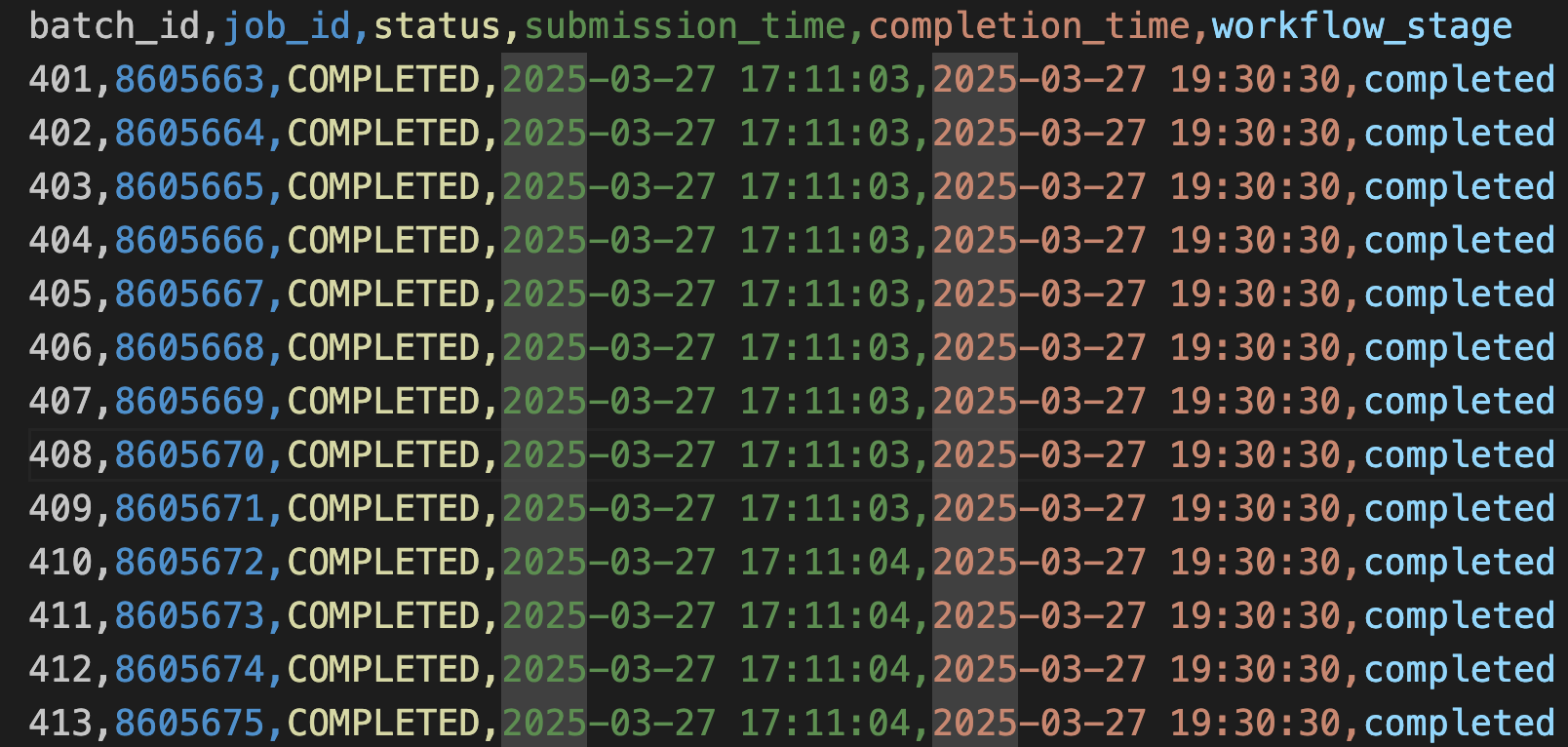
High-throughput Monte Carlo simulations using gRASPA
Developed a tracking tool to manage and monitor high-throughput Monte Carlo simulations using the gRASPA software package. The tool was created to efficiently generate the datasets needed for training an interpretable machine learning model (more details in Relevant links). Since then, the tool has been used in various other projects, ranging from parsing adsorbate numbers to generating complete adsorption isotherm plots. More details on the tool and its functionalities are available in the GitHub repository.
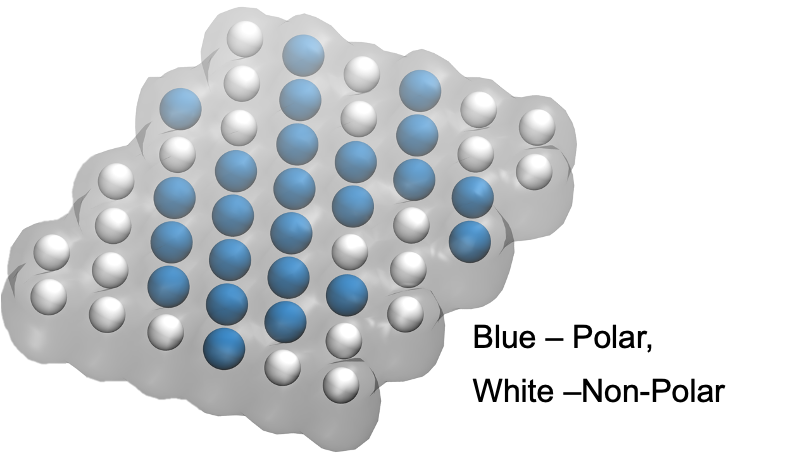
Data-driven design of fouling-resistant membranes
Developed a cheaper emulator to molecular dynamics simulations for predicting binding free energies of foulants on membrane surfaces. The emulator was hence used in an optimization loop to design fouling-resistant membranes. More details will be added once the paper is shared on arXiv.
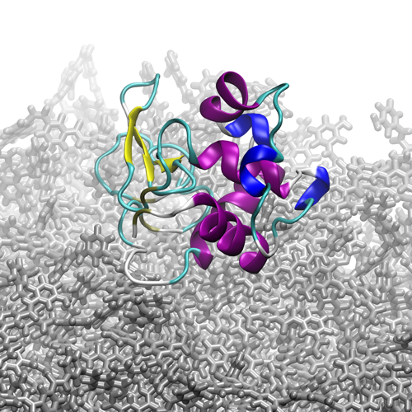
Understanding fouling mechanism of polyamide membranes
Determined the characteristic fouling mechanism of polyamide membranes using molecular dynamics simulations. The study focused on the interaction between the membrane surface and various foulants, providing insights into how fouling occurs at the molecular level. The findings can help in designing better membranes with reduced fouling tendencies. More details will be added once the paper is shared on arXiv.
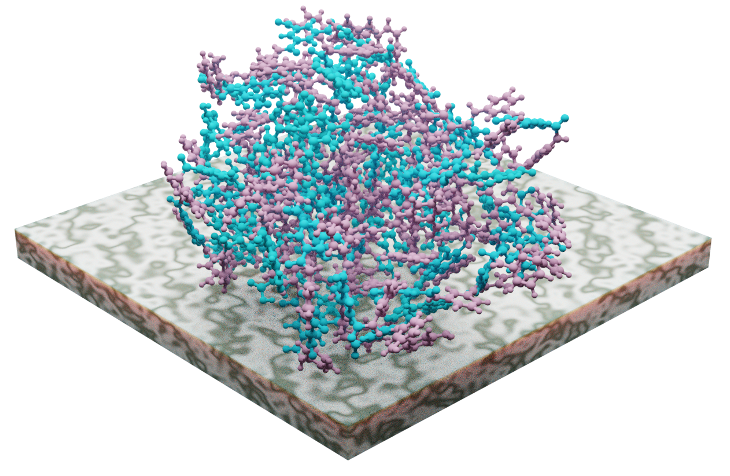
Development of an in-silico polymerization software for amorphous polymers
The software is designed to generate all-atom models of amorphous polymers in GROMACS format. More details will be added once the paper is shared on arXiv.